Most North East homes lose a significant amount of heat through windows and doors that are past their best. Whether you're dealing with draughty frames, blown double-glazing units, or a front door that lets cold air in around the edges, replacing windows and doors is one of the most cost-effective improvements you can make to a property's comfort, security, and energy efficiency. The problem is that costs vary considerably depending on the material, style, and number of units — and the window and door market in particular is full of vague quoting, pressure selling, and inflated 'special offer' pricing that makes it hard to know what a fair price looks like. This guide gives you a clear picture of realistic costs across Newcastle, Durham and Sunderland, what the main material choices actually involve, and what to look for when comparing quotes.
Window frame materials — what's the difference?
The frame material is the most significant decision in a window replacement project. It affects cost, maintenance requirements, aesthetics, and longevity.
- uPVC — the most widely installed window frame material in the UK. Low maintenance, good thermal performance, and the most cost-effective option for most North East properties. uPVC has improved significantly in quality over the past decade. Well-installed uPVC windows with quality hardware will last 20–25 years without significant maintenance. The range of colours and foiled finishes now available means uPVC doesn't have to look cheap.
- Aluminium — a slim-profile, contemporary option. The sightlines (the visible frame width) are significantly narrower than uPVC, which allows more glass area in the same aperture. Modern aluminium windows are thermally broken — meaning the inner and outer sections of the frame are separated by an insulating material to prevent cold transfer. More expensive than uPVC, but longer lifespan and well-suited to modern or contemporary properties.
- Timber — the traditional option for period properties, particularly Victorian and Edwardian terraces in Newcastle, Durham and Sunderland. Timber windows suit these properties better aesthetically than uPVC, and may be required in Conservation Areas or on listed buildings. Genuine hardwood or engineered timber windows require more maintenance than uPVC or aluminium but can last significantly longer when properly maintained. Higher upfront cost.
- Composite (timber-aluminium) — timber on the inside, aluminium on the outside. Combines the interior aesthetics of timber with the low-maintenance exterior of aluminium. A premium option found more commonly on higher-specification projects.
Conservation Area properties or listed buildings in Newcastle, Durham and Sunderland may have restrictions on window materials, profiles, or glazing bar patterns. Always check with the relevant planning authority before committing to a material choice — uPVC sash windows are not automatically permitted in Conservation Areas regardless of how well they replicate the original.
Door types and materials
The main door choices for North East residential properties fall into four categories, each suited to different uses and property styles.
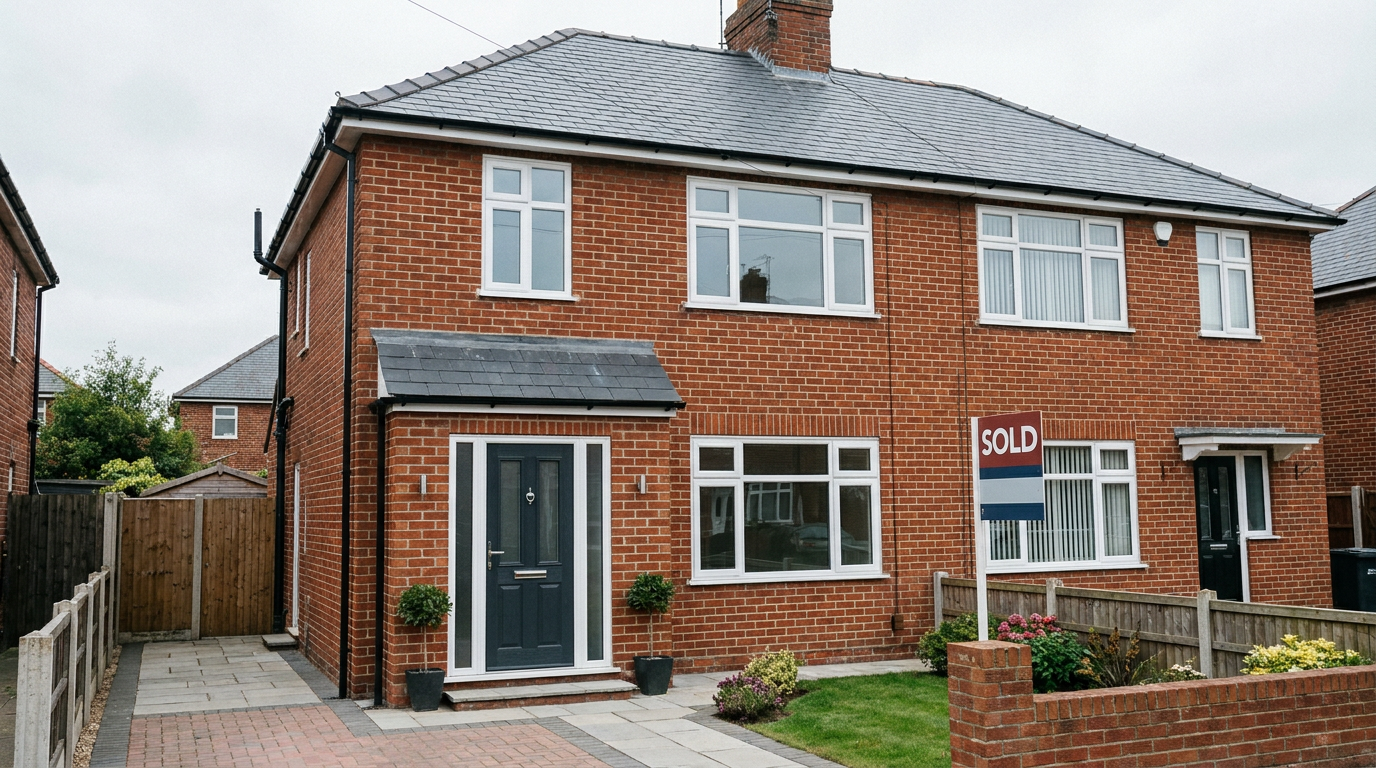
- Composite doors — the most popular front door choice for mainstream domestic properties. A composite door has a solid core (typically insulating foam with a timber or GRP shell), which gives it superior rigidity, security, and thermal performance compared to a hollow uPVC door. Available in a wide range of styles and colours. Retains its appearance well and does not warp or discolour. The right choice for most North East semi-detached and terraced houses.
- uPVC doors — lower cost than composite, but a hollow-slab construction that is less rigid and provides less insulation. Suitable for back doors, utility access, or lower-specification applications. Less premium in appearance than composite.
- Aluminium doors — slim frame profiles and a contemporary, architectural look. Popular for rear access doors on extensions and on modern properties. Thermally broken as standard. Higher cost than uPVC or composite.
- Timber doors — the correct choice for period properties in Conservation Areas and for listed buildings. Requires regular maintenance (painting or staining). Custom sizes and panel designs are straightforward in timber where standard composite and uPVC sizes may not fit older apertures.
Realistic window replacement costs in the North East
These are realistic supply-and-fit costs for replacement windows across Newcastle, Durham, Sunderland and the wider North East. All figures are for fully installed units including frame, sealed double-glazing unit, hardware, and making good.
- Standard casement window, uPVC, per unit (typical bedroom or lounge size) — £350 to £650 supplied and fitted
- Standard casement window, aluminium, per unit — £550 to £950
- Sash window, uPVC, per unit — £600 to £1,100
- Sash window, timber, per unit — £900 to £2,000 depending on size and specification
- Bay window (3-panel, uPVC casement) — £1,200 to £2,200
- Full house re-window, 3-bed semi-detached, uPVC casement — £3,500 to £7,000 depending on the number of openings and any structural lintels or decorative work included
- Full house re-window, 3-bed semi, aluminium — £5,500 to £10,000
Be sceptical of quotes that seem very low. Windows priced below these ranges typically indicate thinner profiles, poor-quality hardware (handles, hinges, locking mechanisms), or below-standard sealed units. Low-quality sealed units blow within a few years; the condensation between panes signals a failed unit and reduced thermal performance. Ask for the brand and specification of the sealed unit, not just the frame.
Door replacement costs in the North East
These are realistic supply-and-fit costs for door replacement in Newcastle, Durham, Sunderland and the wider North East.
- Composite front door, supply and fit — £900 to £1,600 depending on size, style, and specification
- uPVC back or side door — £500 to £900
- Aluminium rear door (single, contemporary style) — £1,000 to £1,800
- Timber front door (softwood, painted finish) — £700 to £1,400
- Timber front door (hardwood, painted or stained) — £1,200 to £2,500
- Frame replacement (including frame, door, and making good) typically adds £150 to £350 to the door cost if the existing frame needs replacing — not all jobs require this, but older properties with rotted or damaged frames usually do
A composite door is significantly more secure than a hollow uPVC door. On a front entrance door in particular, the difference in rigidity and resistance to forced entry is meaningful. Most composite doors are supplied with multi-point locking systems as standard — always confirm this is included, not an optional extra.
Energy ratings — what the labels mean
Windows and external doors in England must meet minimum energy performance standards. The British Fenestration Rating Council (BFRC) operates a rating scheme for windows (A++ to E) and a similar scheme for doors. When comparing quotes, the relevant figures to ask for are:
- U-value — measures the rate of heat loss through the unit. Lower is better. Current Building Regulations require a minimum of 1.4 W/m²K for replacement windows. Better-performing units achieve 1.2 or below.
- Window Energy Rating (WER) — the BFRC letter rating (A++ to E). Any replacement window should achieve at least a C rating. A-rated units are worth specifying for windows on exposed elevations of North East properties.
- Warm-edge spacer bar — the bar that separates the two panes in a sealed unit. A warm-edge (thermally broken) spacer bar reduces condensation at the glass edge and improves overall thermal performance. Often an overlooked detail that makes a real difference in a North East climate.
Planning permission and building regulations
Most window and door replacements on standard residential properties in the North East do not require planning permission — they fall under Permitted Development provided the replacement is in a similar material and style. However, there are important exceptions.
- Conservation Areas — properties in Newcastle, Durham or Sunderland Conservation Areas may need planning permission for window replacements, particularly on front elevations. Always check with the local planning authority before ordering.
- Listed buildings — any alteration to a listed building requires Listed Building Consent, including window and door replacement. This applies even where the work would be PD on a non-listed property.
- Building Regulations — window replacement is notifiable under Building Regulations for energy performance compliance (Part L). A FENSA or CERTASS certificate issued by the installer covers compliance and is a document you'll need when selling the property.
A FENSA or CERTASS certificate is issued by the window or door installer as confirmation that the installation meets Building Regulations requirements. Always ask for this certificate and keep it — it's as important as the guarantee when you come to sell the property.
Thinking about new windows or doors?
Whether you need a single replacement window, a full house re-window, or a new front door that actually keeps the heat in, the right starting point is a proper site assessment and a fixed price that covers everything — frames, units, hardware, installation, and making good. We install replacement windows and doors across Newcastle, Durham, Sunderland and the wider North East: uPVC, aluminium, composite and timber, to suit any property type and budget. Get in touch to arrange a free site visit and a written quote before any work begins.