Damp is one of the most common problems we see in homes across Newcastle, Durham and Sunderland. Older terraces, solid-wall properties and wet North East winters all make it more likely. The key is simple: find the real cause before you spend money on treatment. Treating the symptom without fixing the source means the problem comes back.
The three main types of damp
Most damp falls into one of three categories. Each has a different cause and a different fix.
- Rising damp: groundwater travelling up through masonry. Usually limited to the lower 1 metre of a wall, often with a tide mark and salts.
- Penetrating damp: water getting in through walls or roofs. Caused by failed pointing, blocked gutters, cracked render or leaking pipes.
- Condensation: warm, moist air meeting cold surfaces. Shows up as black mould in corners, behind furniture and around windows.
Condensation is the most common cause of damp in the UK, and it is often misdiagnosed as rising damp.
How to spot the cause
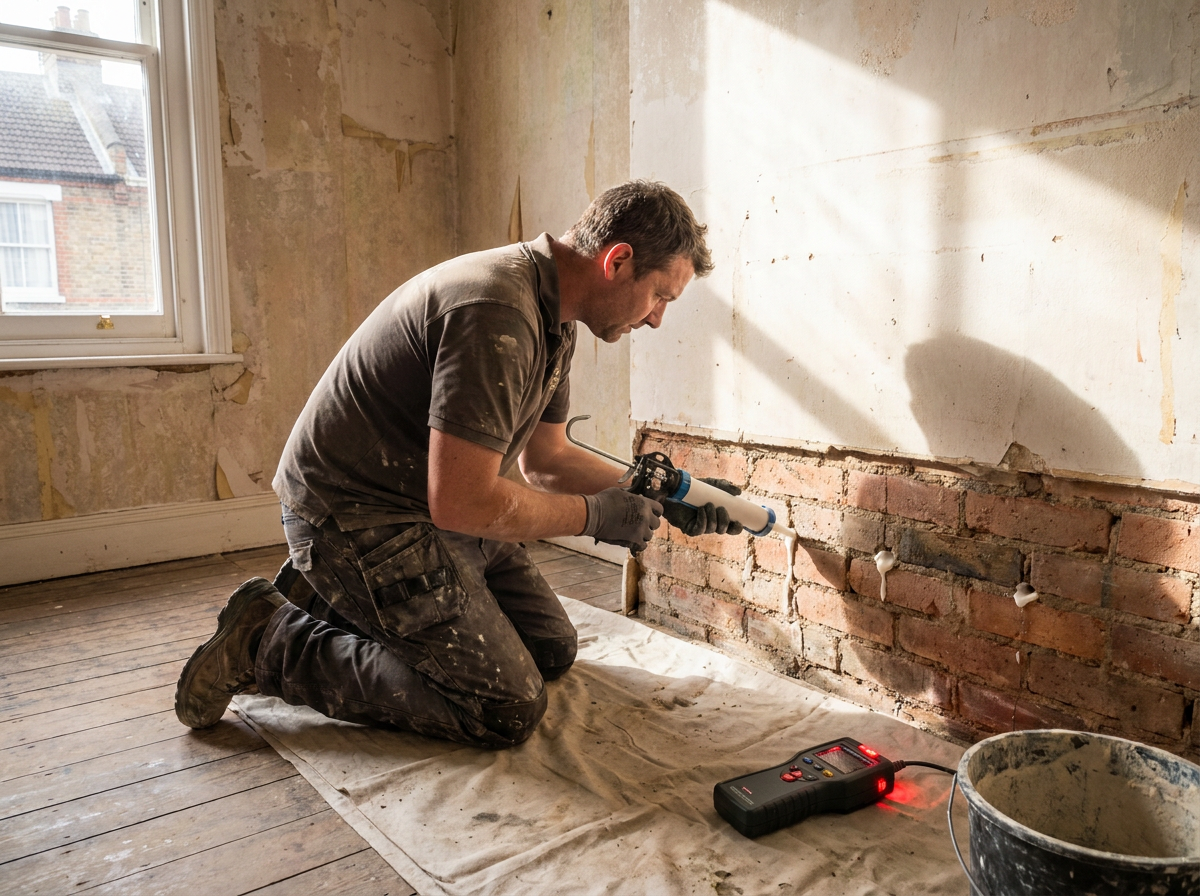
Look at where the damp appears and when. Damp that worsens after heavy rain points to penetrating damp. Mould on cold external walls in winter points to condensation. A consistent band of staining low on ground-floor walls suggests rising damp. A handheld moisture meter gives a quick reading, but it does not replace a proper survey. Salts in plaster can give false readings.
Fixing penetrating damp
Start outside. Clear blocked gutters, repair downpipes, repoint failing mortar and repair cracked render. Check flashings and roof tiles. Once the water source is stopped, the wall needs time to dry before any internal redecoration. Skipping this step is the most common mistake we see.
Fixing rising damp
True rising damp is less common than people think. Where a damp proof course has failed or been bridged, treatment usually means a chemical injection DPC, followed by replastering with a salt-resistant render. Check that soil, paths or patios have not been built up above the damp proof course level. That alone causes many problems.
Fixing condensation
Condensation is a ventilation and heating issue, not a building defect. Extractor fans in kitchens and bathrooms, trickle vents in windows, and consistent background heating make a real difference. Insulation helps too, because warmer walls are less likely to attract moisture.
What does damp proofing cost?
Prices vary with the size of the property and the extent of the problem. These are typical North East ranges.
- Chemical DPC injection: roughly £25 to £60 per metre run.
- Replastering after treatment: roughly £30 to £50 per square metre.
- Gutter and downpipe repairs: from around £150 to £600.
- Repointing: roughly £40 to £70 per square metre.
- Extractor fan installation: from around £150 to £350.
Be wary of anyone who quotes for damp treatment without inspecting the property first.
Get it diagnosed properly
Villa Renovations Ltd manages damp investigation and repair across Newcastle, Durham, Sunderland and the wider North East. We tell you the real cause, even when the answer is a simple gutter repair. Book a free site visit and you will receive a written scope and a fixed-price quote before any work begins.