North East winters are long, and a tired heating system shows. Cold bedrooms, radiators that never get fully hot and bills that keep climbing are the usual signs. A full system upgrade is not always needed, but when it is, doing it properly saves money for years.
Signs your heating system needs upgrading
Not every problem means a new system. These are the symptoms that usually point to one:
- Radiators hot at the top and cold at the bottom, or cold spots across the house
- Black, gritty water when you bleed radiators
- A noisy boiler or pump, or frequent pressure loss
- Original steel radiators or pipework that is 25+ years old
- Rooms that never reach temperature, even with the heating on all day
What an upgrade can include
A full upgrade is more than swapping a boiler. Done properly, it covers the whole system so every part works together.
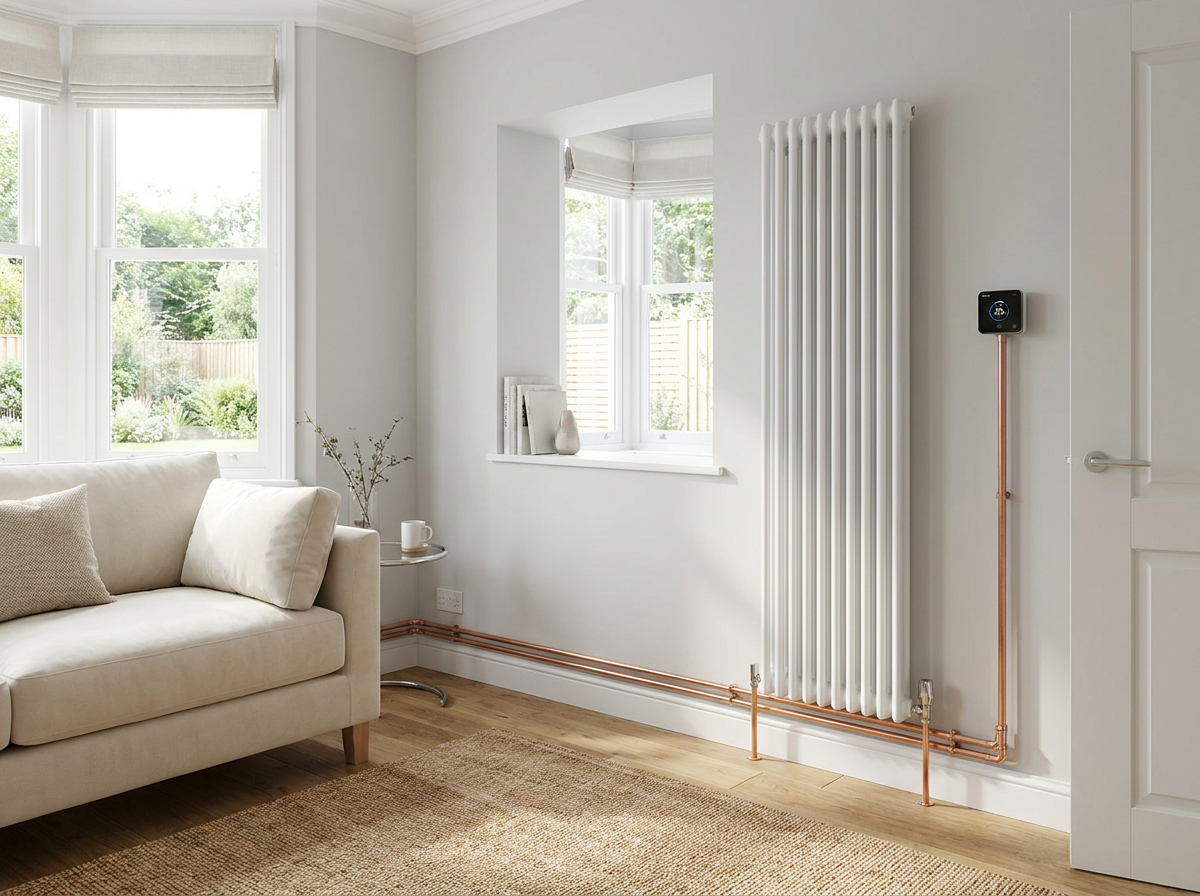
- New radiators sized to each room's heat loss
- Replacement pipework where old or undersized
- A power flush or system clean to remove sludge
- Smart thermostat and thermostatic radiator valves
- A new cylinder or unvented hot water system if needed
- Zoning, so upstairs and downstairs heat independently
What it costs
Prices vary with house size and condition, so treat these as a guide. We always give a fixed written price after a site visit.
- New radiators, fitted: £250 to £550 each including valves and labour
- Power flush: £400 to £700
- Smart thermostat and TRVs: £250 to £600 installed
- Full pipework and radiator replacement, three-bed house: £3,500 to £6,500
- Full system including new boiler: £6,000 to £9,500
Cheapest is rarely best here. A badly sized radiator or poorly balanced system costs you every month in wasted gas.
Heat pumps or gas?
Air source heat pumps are an option, and grants may be available, but they suit well-insulated homes with larger radiators or underfloor heating. Many older North East terraces and semis need insulation work first. We will tell you honestly if a heat pump makes sense for your property, or if a modern high-efficiency gas system is the better buy.
Regulations and safety
Gas work must be carried out by a Gas Safe registered engineer, and new installations should be notified to Building Control and carry a certificate. Always ask to see the Gas Safe ID card. Any electrical work involved, such as thermostat wiring, must also meet current regulations.
How long does it take?
A radiator and pipework replacement in a typical three-bed house takes three to five days. A full system with boiler and cylinder can take five to seven. We protect floors, keep the mess contained and aim to leave you with heating each evening where possible.
Talk to Villa Renovations
If your heating is struggling, we will visit your home in Newcastle, Durham, Sunderland or the surrounding area, explain your options plainly and give you a fixed-price written quote. No pressure and no surprises. Get in touch to book your free site visit.