The electrical installation in your home has a lifespan. Wiring installed before the 1960s used materials and standards that are now considered unsafe. Even wiring from the 1980s and 1990s may be approaching the end of its serviceable life. The problem is that most wiring is hidden — you can't see it deteriorating, and the consequences of leaving it too long can be severe.
Warning signs that your wiring needs attention
Some of these signs indicate an immediate risk; others indicate ageing infrastructure that should be assessed. None of them should be ignored.
- Frequent tripping of circuit breakers or blown fuses — particularly if it happens without an obvious cause
- Lights flickering or dimming when other appliances are switched on
- Burning smell from sockets, switches or the consumer unit (fuse board)
- Discolouration or scorch marks around sockets or switches
- Sockets or switches that feel warm to the touch
- Electric shocks (even mild ones) when touching switches or appliances
- Old-style round-pin sockets, round light switches, or a fuse box with old-style rewireable fuses rather than MCBs
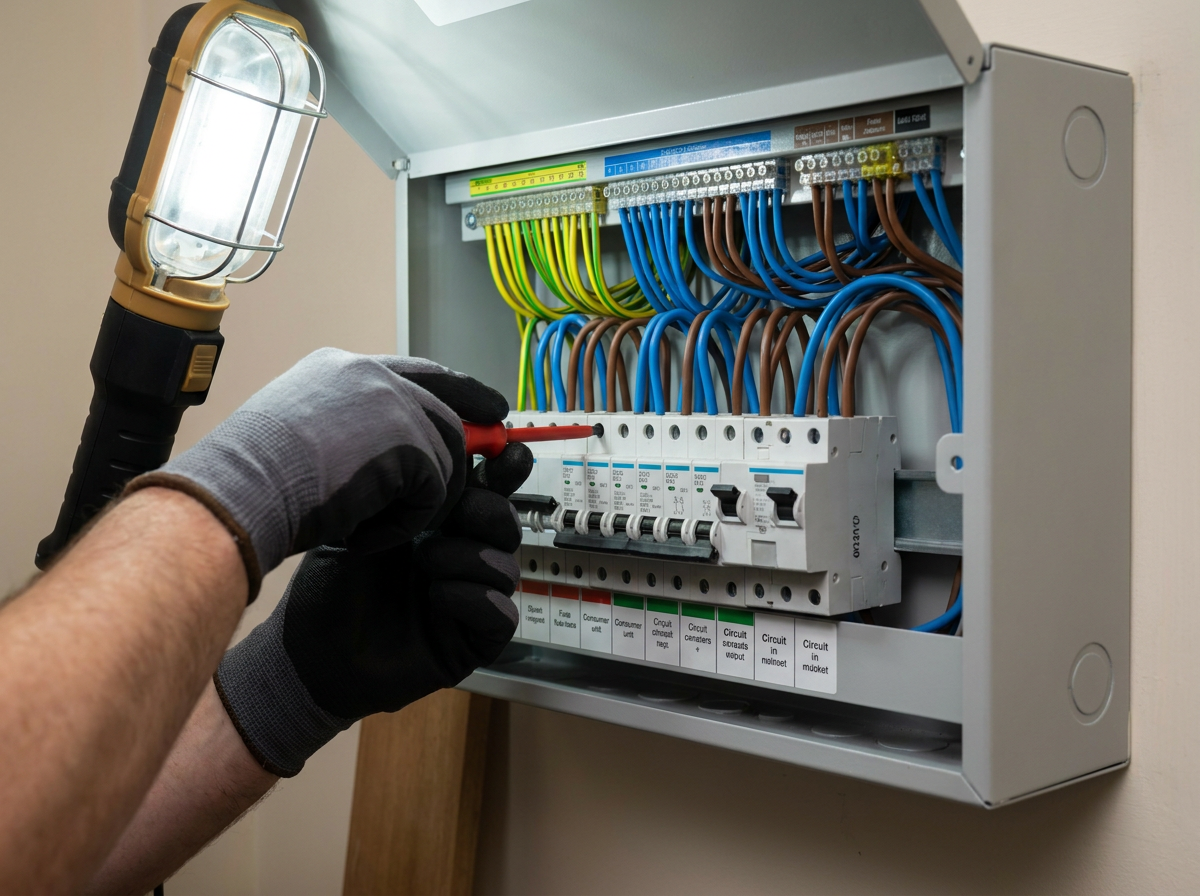
- No RCD protection — if your consumer unit doesn't have an RCD (residual current device), it doesn't meet current standards
- Rubber-sheathed wiring (older than PVC insulation, often black or fabric-covered)
If you can smell burning from any electrical fitting, switch off at the consumer unit and call a qualified electrician immediately. Don't use the affected circuit until it has been inspected.
When was your home last electrically tested?
The current recommendation is that domestic properties should have an Electrical Installation Condition Report (EICR) carried out every 10 years, or at every change of tenancy for rental properties (where it's a legal requirement). If you don't know when the wiring was last inspected, the answer is probably too long ago. An EICR will give you a condition rating and flag any issues that need addressing, which may range from minor remedial work to a full rewire.
Does my home need a full rewire?
Not all electrical problems require a full rewire. A partial rewire — replacing specific circuits or upgrading the consumer unit — is sometimes sufficient. A full rewire is likely to be required if:
- The wiring is original to the property and pre-dates the 1980s
- The insulation on the wiring is rubber rather than PVC (rubber deteriorates and becomes brittle with age)
- Multiple circuits are failing an EICR
- You're undertaking a full renovation that involves significant plastering and decoration — in which case rewiring during the renovation is far cheaper than rewiring after
- You're adding significant new load — EV charger, hot tub, large extension — and the existing installation can't safely support it
What does a rewire involve?
A full rewire involves replacing all the wiring in the property — from the consumer unit through to every socket, switch and light fitting. It's disruptive work because it requires chasing cable routes into walls and ceilings. The order of operations matters:
- First fix — all new cabling run before plastering
- Walls and ceilings replastered and made good
- Second fix — fitting consumer unit, sockets, switches, light fittings
- Testing and certification by a qualified electrician
A rewire carried out alongside a full renovation adds relatively little cost because the walls are being opened up anyway. A rewire carried out in a decorated property is significantly more disruptive and expensive because plaster must be cut, replaced and redecorated. If you're planning a renovation, address the electrics at the same time.
Cost of a rewire in the North East
Rewire costs depend on the size of the property and the number of circuits. Typical ranges for a complete rewire including consumer unit upgrade, all cabling, sockets, switches and certification:
- 2-bed property: from £1,800
- 3-bed property: from £2,500
- 4-bed property: from £3,500
- 5-bed or larger: from £5,000
Don't use an unregistered electrician
Electrical work in the home must be carried out by a qualified electrician and notified to your local authority building control (or carried out under a competent persons scheme such as NICEIC or NAPIT). Using an unregistered electrician means the work won't be certificated, which will cause problems when you sell the property and voids your home insurance in the event of an electrical fire. Always ask for the electrician's registration and for the completion certificate on finishing.