Flooring is one of the most visible and tactile decisions in any renovation, and one of the most commonly underestimated in terms of both cost and impact. The right floor changes how every room feels — it affects warmth, acoustics, and perceived quality in a way that's immediately obvious to anyone who walks in. The wrong choice, or a good choice poorly installed, is equally obvious and expensive to fix. With a wide range of materials now available at different price points, the market is more complex than it was a decade ago. This guide gives you a clear picture of what each flooring type costs, where each one works best, and what to think about before committing. All figures are based on current supply-and-fit prices in Newcastle, Durham, Sunderland and the wider North East.
LVT — the modern go-to option
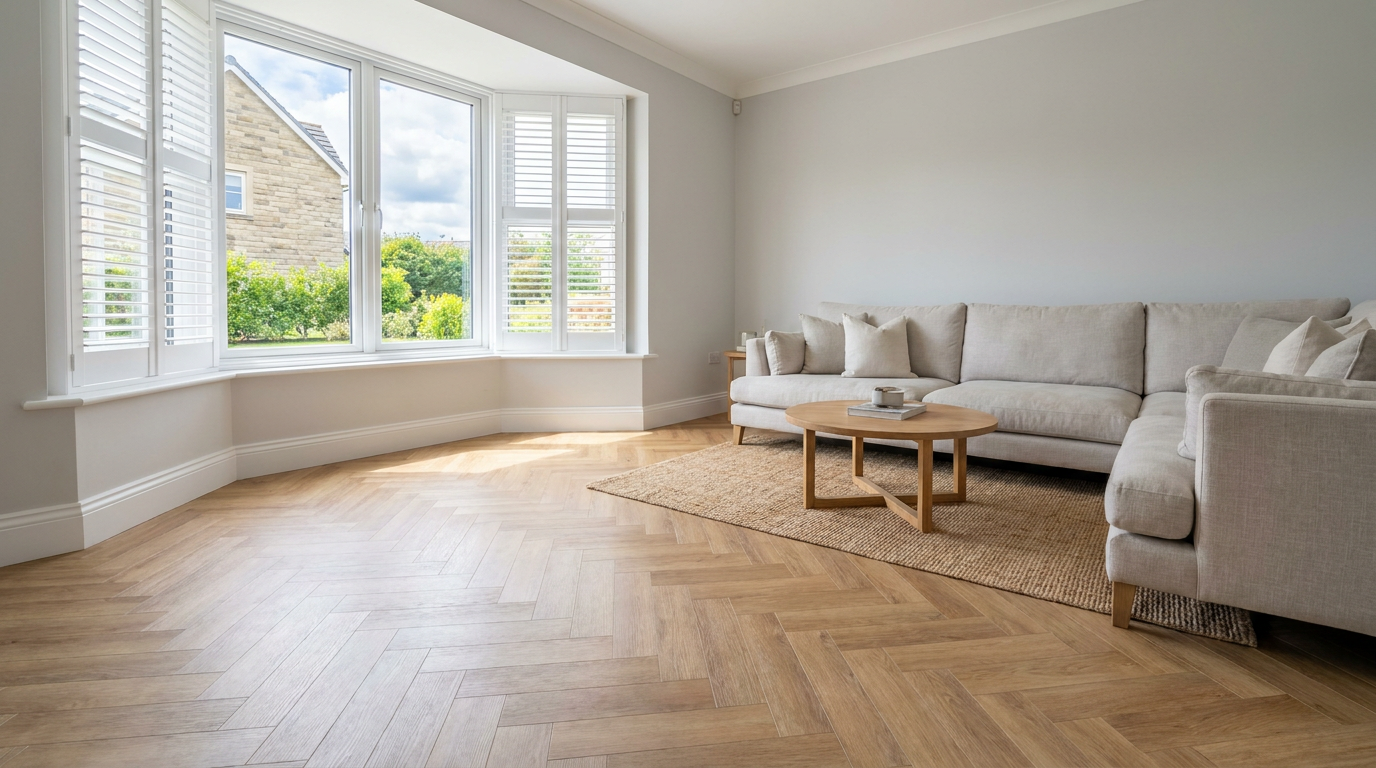
LVT (Luxury Vinyl Tile) has become the most widely specified flooring in North East renovation projects over the past five years — and for good reason. A modern LVT product bears no resemblance to the cheap vinyl flooring of previous decades. It is a multi-layer product: a rigid or semi-rigid core, a photographic layer that accurately replicates wood, stone or tile, and a protective wear layer. The result is a floor that looks convincingly like engineered wood or natural stone, is fully waterproof, and significantly more forgiving of subfloor imperfections than real wood or tile.
- Fully waterproof — suitable in kitchens, bathrooms, hallways and any wet area where real wood would fail
- Warm underfoot and quick to install — faster than tile, less demanding on the subfloor
- Sits flush to skirting boards without expansion gap beading — neater finish than real wood floating floors
- Wide range of realistic finishes — current LVT ranges include very accurate oak, walnut, concrete and stone looks
- Compatible with underfloor heating — most rigid core products are rated for use with UFH up to 27°C
Mid-range LVT from established brands (Karndean, Amtico, Polyflor) typically costs £38 to £50 per m² supply and fit. Budget products start from around £30 per m², though the difference in finish quality and wear layer thickness is noticeable after a few years.
Engineered wood — warmth and character
Engineered wood is the right choice when the look and feel of real timber is the priority but solid hardwood is either too expensive or not appropriate for the subfloor or heating system. An engineered wood board has a real hardwood face veneer — typically 3 to 6mm thick — bonded to a plywood or HDF core. This construction makes it significantly more dimensionally stable than solid wood: it handles humidity changes and underfloor heating better. Engineered wood is best suited to living rooms, dining rooms and bedrooms — any area where you want the authenticity and warmth of real wood. It is not suitable for bathrooms or areas with standing water risk.
- Face veneer thickness matters — 4mm or above gives useful longevity and allows the floor to be sanded and refinished if it becomes worn or damaged
- Pre-finished products are the most practical — site-finished floors require sanding and lacquering after installation, adding time, dust and a delay before use
- Most modern engineered wood products are floating-floor installations, though some can be glued or secret-nailed for a more solid feel underfoot
- Oak in a mid-range finish remains the most widely available choice: £50 to £70 per m² supply and fit; wider boards and premium species can reach £85 per m²
Tile — right for wet and high-traffic areas
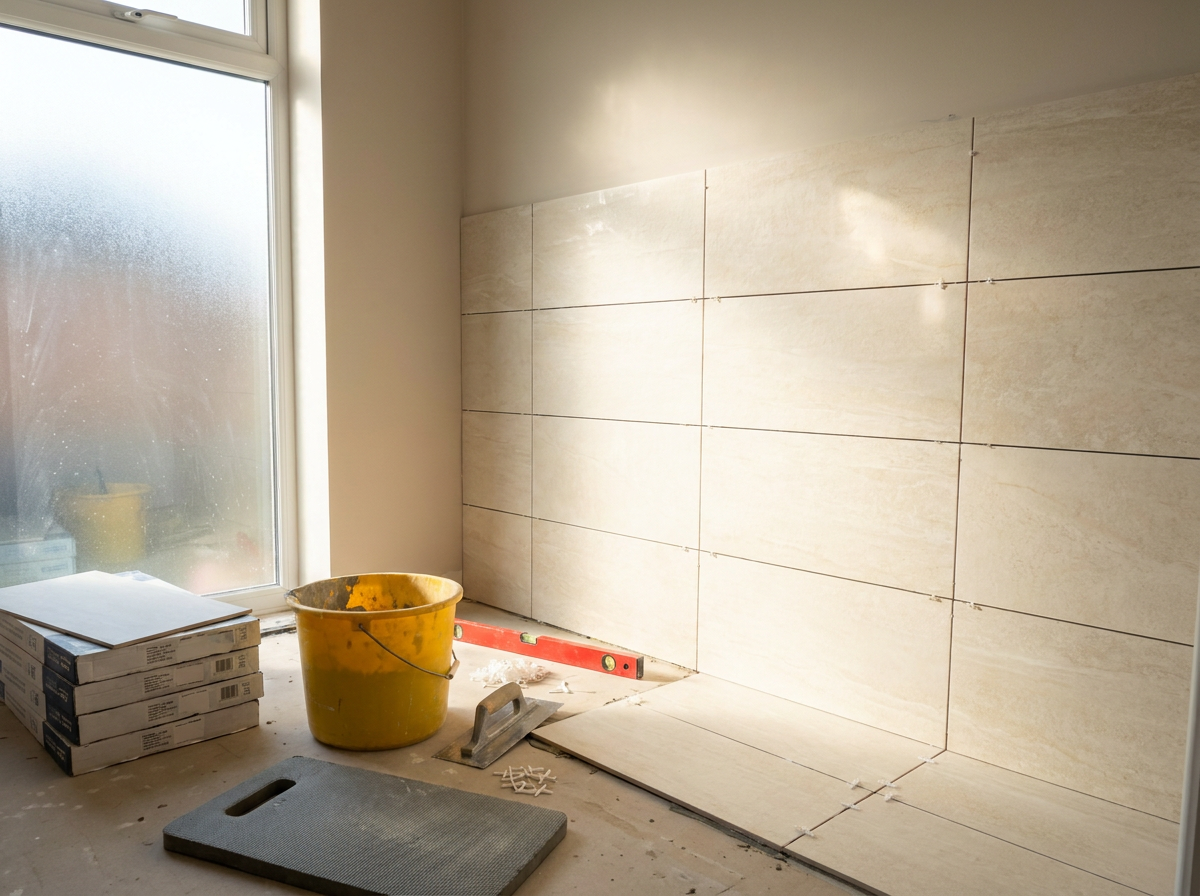
Porcelain tile is the correct choice for bathrooms, kitchens, hallways and utility areas. A properly installed porcelain floor will outlast everything else in the room; poorly installed tile, or tile on an inadequate subfloor, will crack and fail within a few years. The most important factor in tile installation is subfloor rigidity. Any movement in the subfloor will crack the grout and eventually the tiles. On timber joists — standard construction in most North East terraced housing — the subfloor must be stiffened, typically by overlaying floorboards with 18mm plywood screwed at close centres before tiling begins.
- Porcelain tile is significantly harder and less porous than ceramic — always specify porcelain for floors
- Large-format tiles (600x600mm or 600x1200mm) create a contemporary feel but require a very flat subfloor — any deviation is more visible at larger formats
- Matt finishes are more practical than polished or gloss on floors — they show less daily wear and are safer when wet
- Grout joint width and colour matter as much to the finished look as the tile itself — wide grey joints on a large-format floor are a different result to tight white joints on a smaller tile
Supply and fit including preparation, adhesive and grout: £50 to £90 per m² depending on tile specification and subfloor condition. Tiling costs more in bathrooms where the walls are also tiled, and on ground floors where the subfloor needs preparation work.
Carpet — still the right answer in some rooms
Carpet remains the right choice in bedrooms, and for many North East homeowners it's still preferred on stairs and in living rooms. It is warm and soft underfoot, provides acoustic absorption, and costs less per m² than LVT or engineered wood. The quality variation in carpet is substantial — a cheap carpet on a poor underlay looks and feels very different to a good wool-blend on a proper underlay. The underlay is where money is most often saved unnecessarily: a good underlay extends carpet life, improves comfort, and reduces heat loss through the floor.
- Wool or wool-blend carpets maintain their appearance significantly better than pure synthetic alternatives under normal family use
- Loop pile (Berber, cord, twist loop) is more durable in high-traffic areas than cut pile
- Never undercut the underlay — a mid-range carpet on a good underlay performs better than a premium carpet on the cheapest underlay available
- Supply and fit including good-quality underlay: £18 to £40 per m² for mid-range products; wool-blend twist in a good quality finish: £30 to £55 per m²
Realistic room-by-room costs in the North East
Based on current supply-and-fit pricing in Newcastle, Durham, Sunderland and the wider North East, these are realistic costs per area for a standard 3-bed semi-detached or terraced property.
- Double bedroom (approximately 12m²): LVT £360–£660 | Carpet £220–£480 | Engineered wood £540–£1,020
- Open-plan kitchen and diner (approximately 25m²): LVT £750–£1,375 | Porcelain tile £1,250–£2,250
- Bathroom floor only (approximately 5m²): Porcelain tile £250–£450
- Hallway, stairs and landing: carpet throughout £550–£1,000 | LVT in hallway with carpet on stairs £400–£800
- Whole-house flooring package — LVT throughout ground floor plus carpet upstairs on a 3-bed semi: £3,000–£5,500 depending on specification
These figures include adhesive, underlay or preparation as appropriate. They do not include subfloor remediation works — levelling a badly uneven concrete floor, overlaying floorboards with ply before tiling, or damp-proofing a ground floor slab — which are additional and should be surveyed and priced separately.
What to think about before choosing
Beyond aesthetics, several practical factors should shape the decision before you commit to a material.
- Subfloor condition — all flooring is only as good as what it sits on. Uneven subfloors, bouncy boards, loose or hollow tiles, and damp concrete must be addressed before a new floor goes down. LVT is most tolerant of minor imperfections; porcelain tile is least tolerant.
- Underfloor heating — confirm compatibility before ordering. Most LVT products are rated for use over UFH; engineered wood products vary by manufacturer; solid wood is not recommended; tile has excellent thermal conductivity and is the best thermal performer over UFH.
- Noise — in flats, and in semi-detached or terraced properties where rooms sit above living spaces, impact noise transmission matters. A good-quality underlay reduces impact noise significantly. Hard flooring products without acoustic underlays can create noise issues.
- Renovation sequence — flooring should go down last: after plastering, painting, new skirting boards, and all second-fix work is complete. Laying flooring before preceding trades are finished creates unnecessary risk of damage and typically produces more snagging.
Thinking about new flooring?
Whether you're choosing flooring for a single room, a full house refurbishment, or a renovation you're planning from the ground up, the right starting point is an assessment of the subfloor condition and a clear specification before materials are ordered. We install all flooring types across Newcastle, Durham, Sunderland and the wider North East — LVT, engineered wood, tile, carpet and laminate — as part of full renovation programmes or as standalone flooring projects. All work is scoped and priced in writing before it starts. Get in touch to arrange a free site visit and a fixed-price quote.