A new driveway is a significant investment that will be with you for 15–25 years if done properly. The material you choose affects kerb appeal, maintenance requirements, durability and cost — both upfront and ongoing. This guide gives an honest comparison of the main options available, without steering you towards the most expensive choice.
Block paving
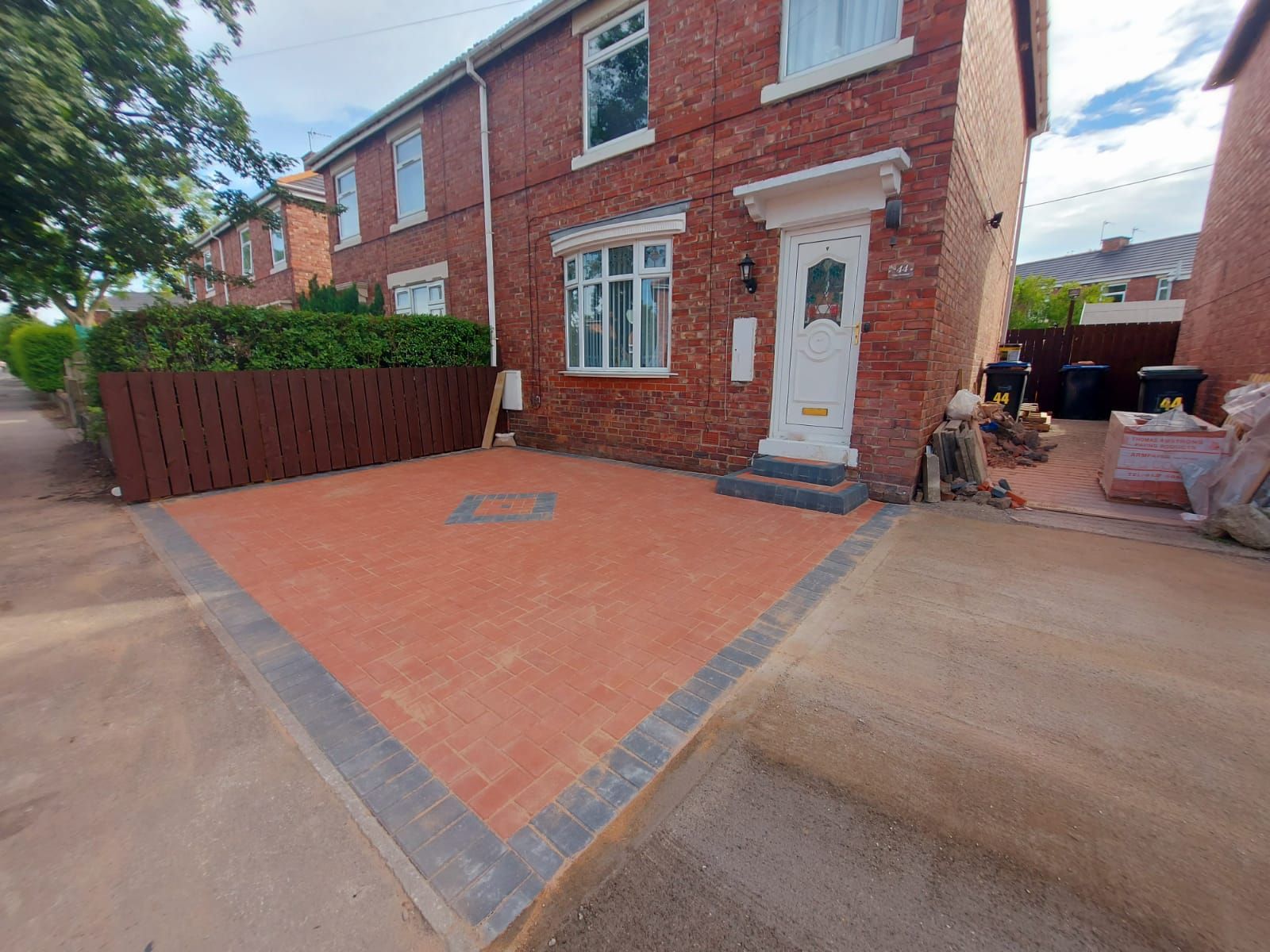
Block paving is the most popular driveway choice in the North East and for good reason. It's durable, looks good, can be repaired without replacing the entire surface, and suits the traditional housing stock found in Newcastle, Durham and Sunderland.
- Cost: from £50 per m² installed
- Lifespan: 20–30 years with proper installation
- Pros: repairable (individual blocks can be lifted and replaced), good drainage if laid with permeable jointing, wide range of colours and patterns, adds kerb appeal
- Cons: weeds can establish in the joints over time, efflorescence (white salt deposits) is common on new block paving, block colour fades slightly over time
- Best for: most residential properties, particularly traditional-style homes
The quality of block paving is almost entirely determined by the quality of the sub-base. A proper MOT Type 1 sub-base, correctly compacted, is what prevents sinking and unevenness. A contractor who doesn't explain their sub-base specification is cutting corners on the bit you can't see.
Porcelain paving
Porcelain driveways have grown significantly in popularity. Large-format porcelain slabs give a clean, contemporary look that works particularly well on modern properties.
- Cost: from £70 per m² installed
- Lifespan: 25–30+ years
- Pros: extremely hard-wearing and frost-resistant, non-porous so very low maintenance, doesn't fade, wide range of finishes including wood-effect and stone-effect
- Cons: higher upfront cost, more difficult to repair if a slab cracks (matching a discontinued product is hard), requires experienced installation to get the levels and falls right
- Best for: contemporary homes, homeowners who want a premium finish and low ongoing maintenance
Resin bond
Resin-bound driveways use small aggregate stones set in a clear resin, creating a smooth, permeable surface. They've become popular for their clean appearance and SuDS compliance (they allow water to drain through, which matters for planning in some cases).
- Cost: from £40 per m² installed
- Lifespan: 15–25 years
- Pros: smooth surface, permeable (no puddles), wide colour choice, good for dropped kerb compliance
- Cons: can be susceptible to UV yellowing on cheaper systems, repairs are visible (new resin doesn't match aged resin perfectly), installation quality varies significantly
- Best for: properties where drainage is important, contemporary aesthetics
Tarmac (with or without edging)
Tarmac remains the most cost-effective driveway option and is perfectly suited to larger driveways where appearance is less of a priority than function.
- Cost: from £25 per m² installed
- Lifespan: 15–25 years
- Pros: lowest cost option, quick to install, good for large driveways, can be refreshed with a resurface
- Cons: plain appearance, can soften in extreme heat (rare in the North East), oil stains are difficult to remove
- Best for: larger driveways, functional rather than aesthetic priority
What about drainage regulations?
Any new driveway over 5m² must be permeable or drain to a suitable soakaway under Permitted Development rules — this is a building regulations requirement, not an optional extra. Block paving with permeable jointing compound, resin-bound systems and loose gravel all meet this requirement. Impermeable surfaces (solid tarmac, standard porcelain without drainage channels) require planning permission in most cases. A legitimate contractor will advise you on this from the start.
Our recommendation
For most North East homes: block paving is the best all-round choice — good value, durable, repairable, and suits traditional and modern homes equally. For contemporary new-builds or homeowners who want a premium finish: porcelain gives the cleanest result and requires the least maintenance. For budget: tarmac on larger driveways where practicality matters more than kerb appeal. Whatever you choose, the sub-base preparation is where quality is made or lost — don't let a contractor skip this to save money.