A commercial fit-out turns an empty or outdated unit into a space your business can trade from. Every week of delay is a week of rent with no income, so planning matters more here than on almost any domestic job. Whether you are opening a shop in Sunderland, a clinic in Durham or an office in Newcastle, the same principles apply. All prices below are in pounds sterling and reflect typical North East costs.
Cat A, Cat B and what you actually need
Fit-outs are split into two broad types. Knowing which one you need stops you paying for work the landlord should already have done.
- Category A: base build — ceilings, raised floors, basic lighting, heating and ventilation
- Category B: the tenant fit-out — partitions, finishes, kitchenettes, branding, data and furniture
- Retail and hospitality units often need bespoke joinery, extraction and customer toilets on top
Read your lease before you price anything. It decides who pays for what, and what must be reinstated when you leave.
What does a fit-out cost?
Costs vary with specification, but these are realistic North East ranges per square foot. A 1,000 sq ft office at a mid-range specification typically lands between £35,000 and £60,000.
- Basic office refresh: £25 to £40 per sq ft
- Mid-range office or clinic: £40 to £70 per sq ft
- Retail unit: £50 to £90 per sq ft
- Café or restaurant: £100 to £200 per sq ft, driven by kitchen and extraction
The stages, in order
A properly run fit-out follows a fixed sequence. Skipping a stage is how projects overrun.
- Survey and design: measured survey, layout and written scope
- Approvals: landlord consent, building regulations, fire strategy and any licensing
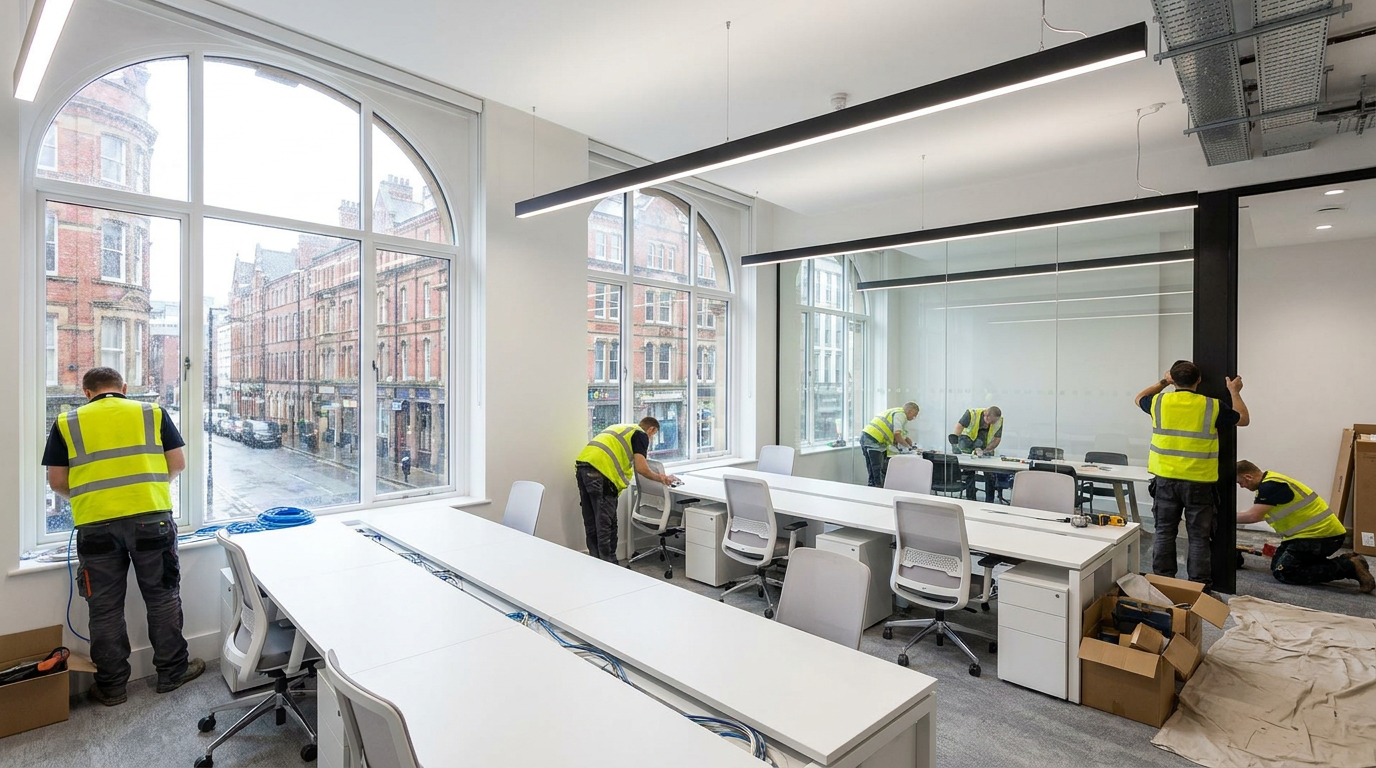
- Strip-out and first fix: demolition, partitions, electrical, plumbing and data
- Second fix and finishes: ceilings, flooring, decoration, joinery and lighting
- Testing, snagging and sign-off with certificates handed over
Compliance you cannot skip
Commercial premises carry legal duties that homes do not. Fire detection and emergency lighting, accessible entrances and toilets, electrical test certificates and Gas Safe sign-off on any gas work are all required. Change of use can also need planning permission, so check with Newcastle, Durham or Sunderland council before you sign a lease. Retrofitting compliance after the event costs far more than building it in.
Where fit-outs go wrong
Most overruns trace back to the same few causes. A vague scope leads to variations. Long-lead items such as glazing, bespoke joinery and extraction units get ordered late. Trades are booked separately and fall out of sequence. Hidden defects, like old wiring or damp, surface only after strip-out.
- Agree a written scope and fixed price before work starts
- Order long-lead items in week one
- Use one contractor to coordinate every trade
- Allow a contingency of 5 to 10 per cent for hidden defects
Planning your timeline
A small office or shop usually takes four to eight weeks on site. A larger unit or a kitchen-led hospitality space can take twelve weeks or more. Work backwards from your opening date, and add time for approvals and deliveries. Out-of-hours working is possible if you are staying in occupied premises, though it adds cost.
Talk to us before you sign the lease
Villa Renovations Ltd manages commercial fit-outs across Newcastle, Durham and Sunderland under one point of responsibility. We offer a free site visit, an honest view on what the unit needs, and a written scope with a fixed price before anything starts. Get in touch and we will arrange a time that suits you.