Home security has changed significantly in the last decade. What was once an expensive, complex installation requiring specialist equipment is now accessible to most homeowners — but the range of options is wide, the quality varies enormously, and a poorly planned system can leave gaps that defeat the purpose entirely. Whether you want a simple camera covering your front door or a fully integrated system with access control, smart alerts and recording, the right approach starts with understanding what each component does and what it actually costs.
What a modern home security system can include
A complete home security setup typically combines several components. Most homeowners don't need all of them — the right combination depends on your property, your priorities and your budget.
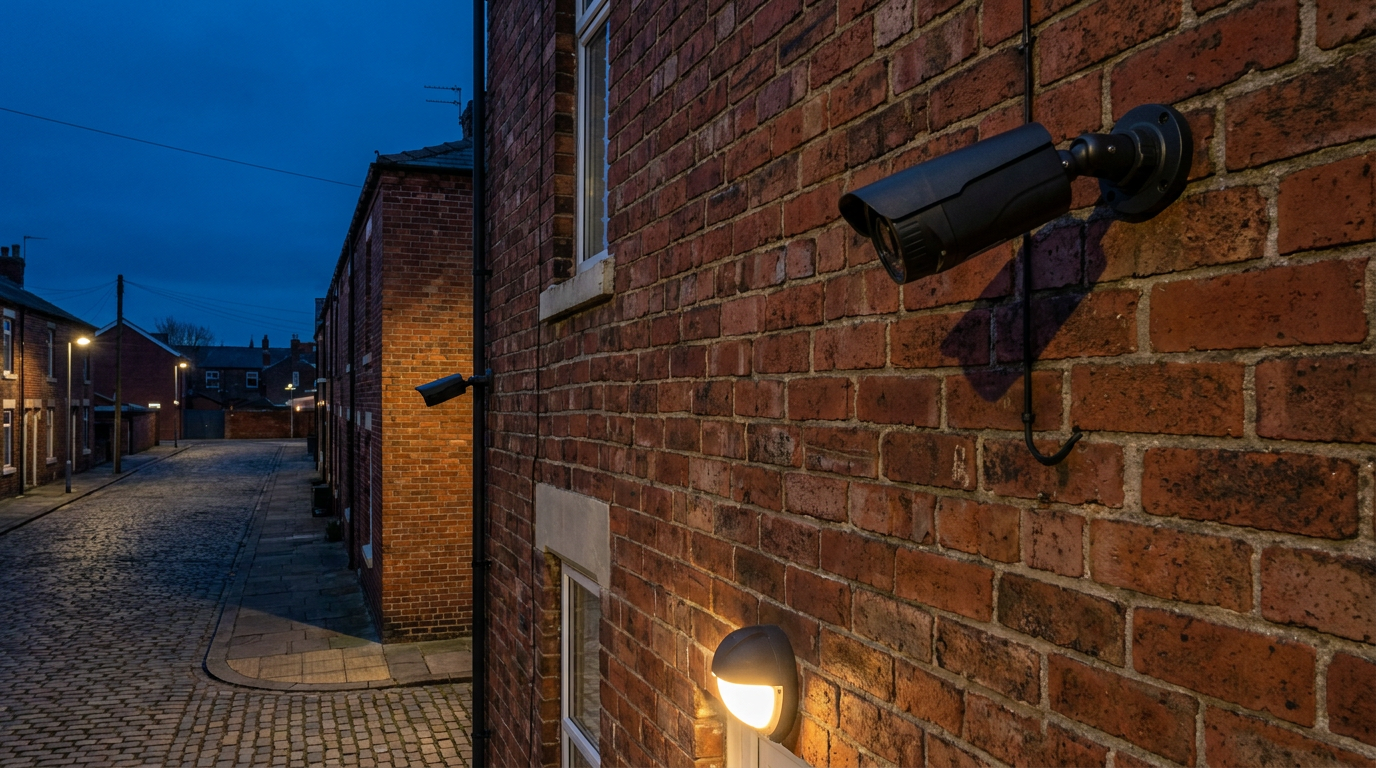
- CCTV cameras — fixed or PTZ (pan-tilt-zoom) cameras covering key areas such as front and rear access points, driveways, gates and outbuildings. Footage recorded to a DVR/NVR or cloud storage.
- Video doorbells — a camera combined with a doorbell that allows two-way audio and video from your smartphone. A popular first step for many homeowners.
- Security lighting — PIR (passive infrared) motion-activated floodlights that deter intruders and trigger cameras. One of the most cost-effective deterrents available.
- Intruder alarms — wired or wireless alarm systems with door/window contacts, PIR sensors and a monitoring service if required.
- Access control — keypads, fob readers, intercoms, and smart locks that control who can enter a property. Popular for driveways, side gates and commercial premises.
- Smart integration — linking cameras, lights and alarms to a single app or smart home platform for remote monitoring and control.
CCTV camera types and what to choose
Not all CCTV cameras are the same. The key decisions are resolution, night vision, wired versus wireless, and where the footage is stored.
- Resolution — 1080p Full HD is the minimum worth installing. 4K cameras are available and provide significantly better detail for identifying faces or vehicle number plates. Worth the extra cost on driveways and main entry points.
- Night vision — most cameras include infrared night vision. Colour night vision (using a built-in LED) costs more but provides a more useful image in low light. For driveways and areas without existing lighting, colour night vision is a meaningful upgrade.
- Wired vs wireless — wired cameras (using coaxial cable or IP cable) are more reliable, harder to interfere with, and don't depend on Wi-Fi signal strength. Wireless cameras are easier to install but can suffer from signal issues in larger properties or outbuildings.
- Storage — local recording to a DVR or NVR provides footage without a subscription fee and keeps your data on site. Cloud recording offers remote access and off-site backup but involves ongoing costs.
- Weatherproofing — cameras installed externally must be rated IP66 or IP67 for the North East climate. Lower-rated cameras deteriorate quickly in the rain and frost that are common here.
Camera placement matters as much as camera quality. A well-positioned lower-resolution camera is more useful than a high-resolution camera in the wrong location. Before purchasing any equipment, plan the coverage — which angles are you actually trying to monitor?
Security lighting — the most cost-effective deterrent
Security lighting is consistently undervalued. Motion-activated floodlights are cheap to buy, cheap to run (LED), and highly effective at deterring casual intruders. They also significantly improve the usefulness of CCTV footage — a camera filming a dark garden is far less valuable than one triggered alongside a floodlight.
- PIR LED floodlights — the standard choice. Motion-activated, adjustable sensitivity and duration, 20–50W LED. Prices start from £30–£80 per light installed by an electrician.
- Dual PIR floodlights with integrated camera — combines a floodlight and a camera in one fitting. Useful where a single unit covers the required area and saves running separate cables.
- Smart security lights — Wi-Fi connected PIR lights that can send phone alerts and integrate with smart home platforms. More expensive than standard PIR lights but offer remote control.
- For most North East homes: two or three well-positioned PIR LED floodlights covering the front, rear and any side access points costs £200–£500 fully installed, and makes a substantial difference to both perceived and actual security.
How much does a home security system cost in the North East?
These are realistic supply-and-fit costs for home security installations in Newcastle, Durham, Sunderland and the wider North East.
- Video doorbell installation (supplied by homeowner) — £80 to £150
- 2-camera CCTV system, 1080p, DVR recording — £400 to £700
- 4-camera CCTV system, 4K, DVR recording — £700 to £1,400
- 8-camera full-property system with NVR — £1,200 to £2,500
- PIR security floodlight installation (per light) — £80 to £180
- Wired intruder alarm, 3-bed property — £600 to £1,200
- Access control for driveway gate (keypad/fob) — £400 to £900
- Integrated smart security system (cameras, lights, alarm, app control) — £2,000 to £5,000+
These figures assume professional installation with proper cable management and testing. Self-installed wireless systems cost less upfront but are more prone to failure, more vulnerable to interference, and harder to maintain or expand over time.
What affects the cost?
Several factors push security installation costs above the base figures.
- Property size — more cameras, more cable, more time. A detached property with a large garden and outbuildings costs significantly more to cover than a terraced house.
- Cable routing — concealing cables inside walls, through lofts, and under floors takes time. Surface-mounted trunking is quicker and cheaper but less discreet.
- Existing infrastructure — properties with accessible loft spaces and cable runs already in place (from a previous system) are faster to install into.
- Camera specification — 4K cameras with colour night vision and smart integration cost more than basic 1080p units.
- Access control complexity — a simple keypad on a side gate is straightforward; an intercom system with automatic gate control and remote access is a more involved installation.
- Integration with existing systems — adding new cameras or sensors to an existing alarm or smart home system requires compatibility checks and sometimes additional hardware.
Professional installation vs DIY
Wireless cameras and plug-in video doorbells are straightforward enough for most homeowners to install themselves. For anything beyond that — hardwired CCTV systems, access control, security lighting requiring new electrical circuits, or alarm systems — professional installation is the right approach for several reasons.
- Cable management — a professionally installed system has cables properly concealed or trunked, protecting them from weather and tampering.
- Electrical safety — any new circuit or outdoor socket must be installed by a qualified electrician and certificated under Part P of the Building Regulations.
- Camera positioning — an experienced installer will identify coverage gaps and camera placement errors that aren't obvious until something goes wrong.
- System configuration — DVRs, NVRs, and smart security platforms need to be properly configured to record reliably, retain footage for the required period, and send alerts correctly.
- Ongoing support — a professionally installed system can be serviced, expanded, and maintained. A self-installed system often can't.
Home insurance providers increasingly offer discounts for professionally installed, certified security systems. Check with your insurer before installation — the discount may offset a significant portion of the installation cost.
Thinking about upgrading your home security?
Whether you want a single camera over the front door or a full property system with CCTV, access control and smart integration, the right setup starts with understanding your property's specific vulnerabilities. We install CCTV systems, security lighting, access control and smart security solutions across Newcastle, Durham, Sunderland and the wider North East. All electrical work is fully certified. Get in touch to arrange a free site visit — we'll recommend the right system for your property and give you a fixed price before any work starts.