If your boiler is over 15 years old and starting to show its age, the question isn't whether to replace it — it's when. A modern A-rated condensing boiler is significantly more efficient than an older G-rated unit, which means lower energy bills and fewer breakdowns. But boiler replacement is a significant expense, and understanding your options makes a real difference to what you pay.
Signs your boiler needs replacing
Some of these are obvious; others less so. If several apply at once, repair is almost always the wrong answer.
- It's more than 15 years old and no longer eligible for manufacturer spare parts
- Repair costs are approaching or exceeding 50% of the cost of a new boiler
- It's failing its annual service — repeated faults on the same components
- Heating bills are increasing without a clear explanation
- Rooms are slow to heat or the water temperature is inconsistent
- The boiler is making noises it didn't used to — banging, kettling, or gurgling
- It's been condemned or advised for replacement by a Gas Safe engineer
A boiler that's on its last legs will typically cost more in call-out fees and repairs over two years than a replacement. If your engineer is telling you to replace it, they're usually right.
Types of boiler — which is right for your home?
There are three main types of domestic boiler. The right choice depends on the size of your home, your hot water demand, and your existing heating system.
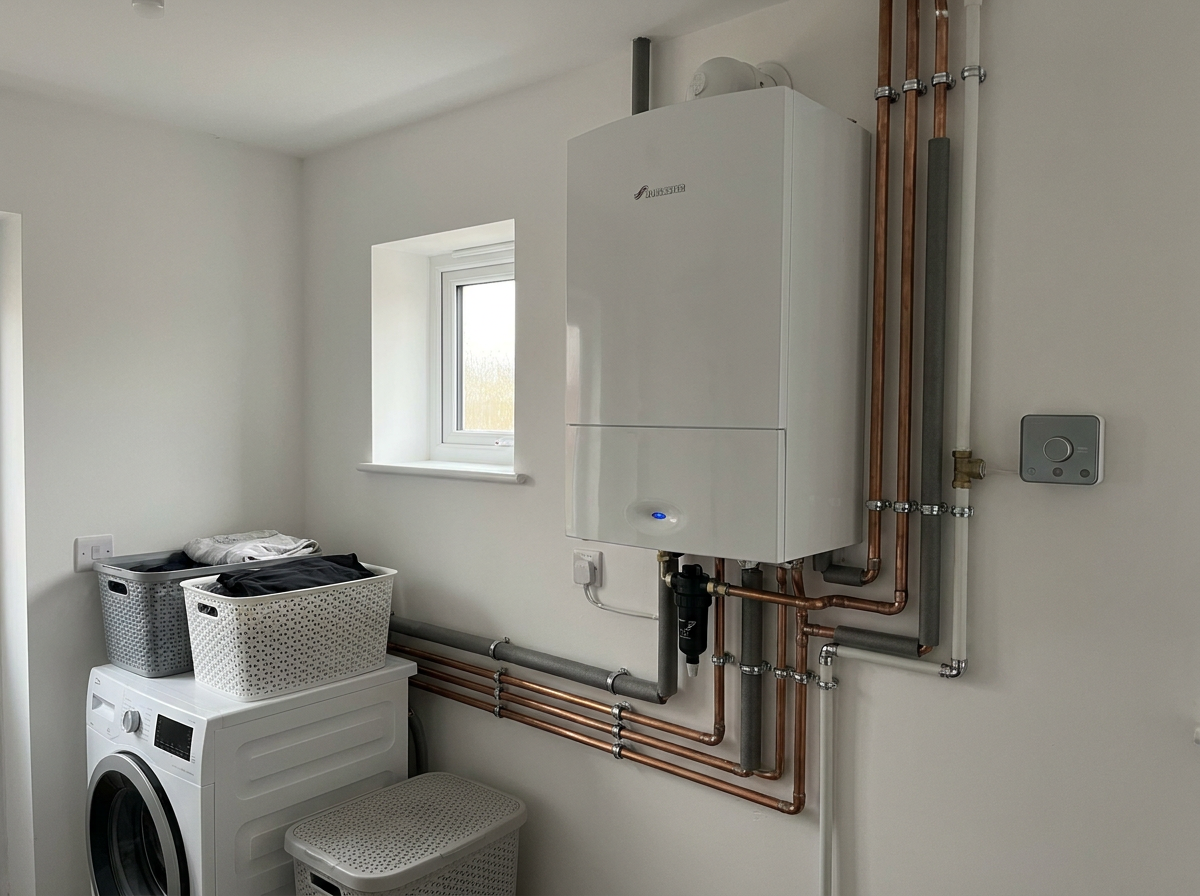
- Combination (combi) boiler — heats water directly from the mains on demand. No hot water cylinder or cold water tank needed. Best for smaller homes and households where only one hot water outlet is typically used at a time. The most popular type in the UK.
- System boiler — works with a hot water cylinder (stored hot water) but doesn't need a cold water tank in the loft. Better for larger households with higher simultaneous hot water demand — multiple showers running at once, for example.
- Heat-only (regular or conventional) boiler — requires both a hot water cylinder and a cold water tank. Typically found in older properties. Replacement usually means like-for-like unless the system is being modernised.
How much does a boiler replacement cost in the North East?
These are realistic costs for a complete boiler replacement in Newcastle, Durham, Sunderland and the wider North East, including supply and fitting of the boiler, flue, controls and commissioning.
- Combi boiler replacement (like-for-like, same location) — £1,500 to £2,500
- Combi boiler with relocation or system change — £2,500 to £4,000
- System boiler replacement (with existing cylinder) — £1,800 to £3,000
- System boiler with new hot water cylinder — £2,500 to £4,000
- Full system upgrade with new radiators, TRVs and smart controls — from £4,500
These prices assume a straightforward installation. Properties with complex pipework, awkward flue routes, or those requiring a powerflush will cost more. A powerflush to descale the heating system typically adds £250–£400.
What affects the cost?
Several factors push boiler replacement costs above the base figures.
- Brand and model — mid-range boilers (Worcester Bosch, Ideal, Viessmann) are well-proven and cost less than premium brands; budget boilers save money upfront but have higher long-term maintenance costs
- Location — relocating a boiler to a new position involves additional pipework and potentially a new flue route
- Flue — a standard through-wall flue is cheapest; a vertical flue through a roof or extended horizontal run adds cost
- Powerflush — if the heating system has significant sludge and debris, a powerflush is usually recommended before fitting a new boiler
- Smart controls — a smart thermostat (Nest, Hive, Drayton) adds £150–£300 but can reduce heating bills by 10–15% through better control
- Radiator upgrades — if some radiators are undersized or inefficient, replacing them at the same time saves on labour costs versus returning later
What to expect during installation
A standard combi boiler replacement typically takes one to two days. A like-for-like swap — same location, same flue route, same pipework connections — is usually a single day's work. A more complex replacement or system change will take two to three days. The process follows a straightforward sequence:
- Gas and water supplies isolated
- Old boiler drained down and removed
- New boiler positioned and pipework connections made
- New flue fitted and sealed
- System commissioned and pressure-tested
- Controls programmed and walked through with you
Before the engineer leaves, they must give you a Benchmark commissioning checklist and register the boiler with the manufacturer. Don't accept the job as complete without these — registration is required for your warranty to be valid.
Gas Safe registration — why it's not optional
All gas work in the UK must be carried out by a Gas Safe registered engineer. This is a legal requirement. An unregistered person working on your gas is breaking the law, and work carried out without Gas Safe certification cannot be properly certificated or registered with your local authority. Ask your engineer for their Gas Safe registration card before they start work — you can also verify their registration at the Gas Safe Register website. Any legitimate engineer will welcome this.
Don't wait for it to break down in January
The worst time to replace a boiler is when it's already failed in the middle of winter — you're cold, you're under pressure, and you're more likely to accept the first quote you receive. If your boiler is ageing, get it assessed now. We carry out boiler replacements and heating system upgrades across Newcastle, Durham, Sunderland and the wider North East. All our gas engineers are Gas Safe registered. A site visit is free, and the price you receive is fixed — no call-out charges added later, no unexpected extras once the work is under way. Get in touch to arrange a visit.