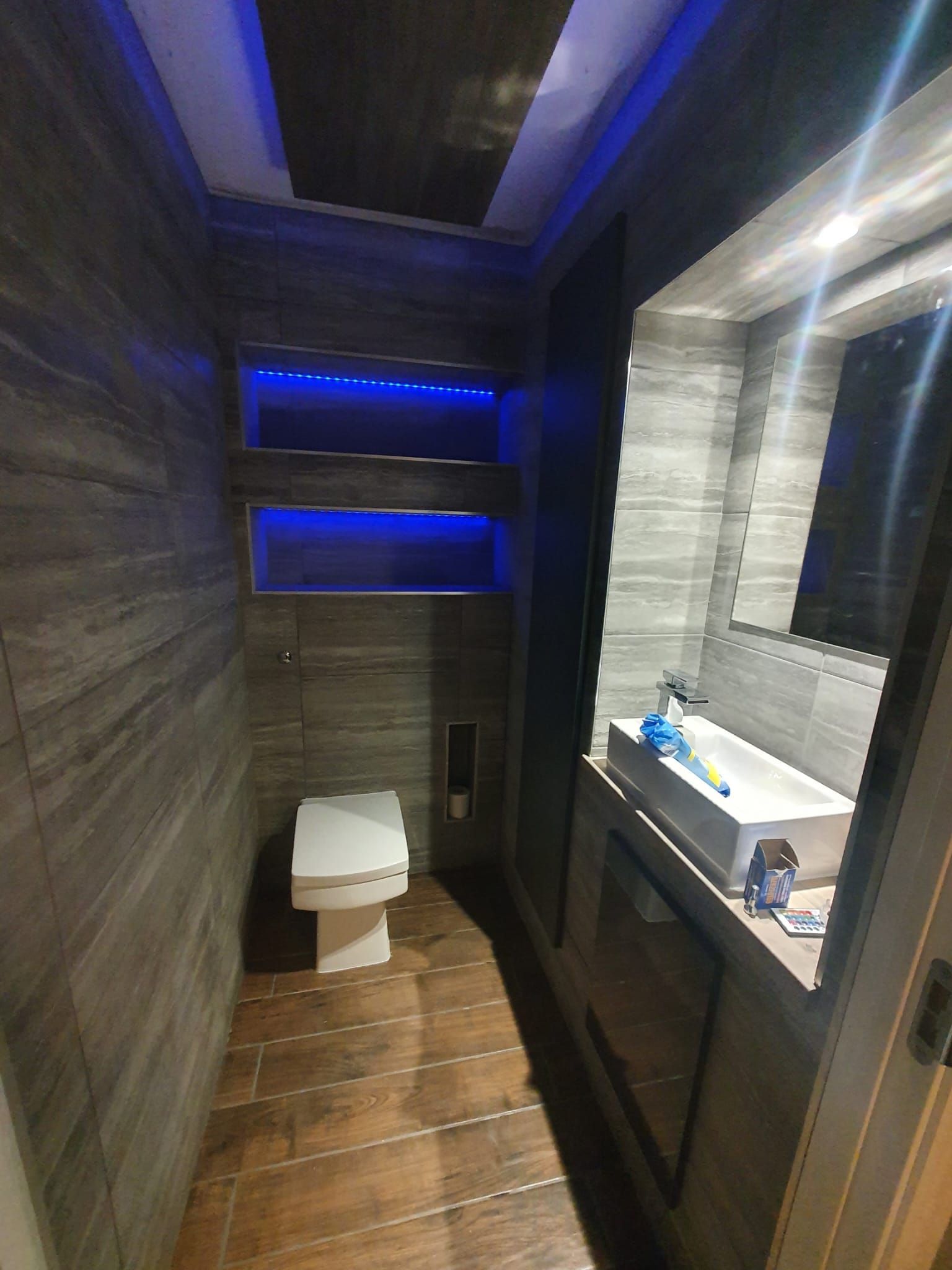
A bathroom renovation ranks among the highest-impact home improvements you can make. It adds value, improves daily life, and — when done properly — should last twenty years without needing attention. The key word is 'properly'. Bathrooms are a wet room. Poor waterproofing, incorrect falls, or substandard tiling will result in damp, damage, and expensive remedial work. Getting it right starts before a single tile is removed.
Step 1: Decide what you actually want
Before thinking about budgets or contractors, be clear on what outcome you want. Are you doing a like-for-like refresh — same layout, new sanitaryware and tiles? Or are you changing the layout — moving the shower, adding a bath, converting to a wet room? Layout changes add significant cost because they involve moving plumbing. A same-layout refresh is always cheaper than a full redesign.
- Refresh: same layout, new suite, new tiles, new flooring — typically 1–2 weeks
- Redesign: new layout, moved plumbing, new suite — typically 2–4 weeks
- Wet room conversion: full waterproofing, drainage, level access — typically 2–3 weeks
- En suite creation: building a new bathroom in an existing room — typically 3–5 weeks
Step 2: Set a realistic budget
Bathroom renovation costs in the North East for a complete job (all trades, all materials) typically range as follows:
- Small bathroom (under 4m²), standard specification — from £2,500
- Medium bathroom (4–7m²), mid-range specification — from £4,500
- Large bathroom or wet room conversion — from £8,000
- En suite creation (new room) — from £5,000 depending on size and finish
These are complete project costs including strip-out, waterproofing, tiling, sanitaryware, plumbing, electrics, plastering and decorating. A quote that only covers some of these elements will look cheaper — but the real cost is the same once all trades are factored in.
Step 3: Understand what's included in a proper job
A bathroom renovation involves more trades than most people expect. The full list for a standard project:
- Strip-out of existing suite and floor and wall tiles
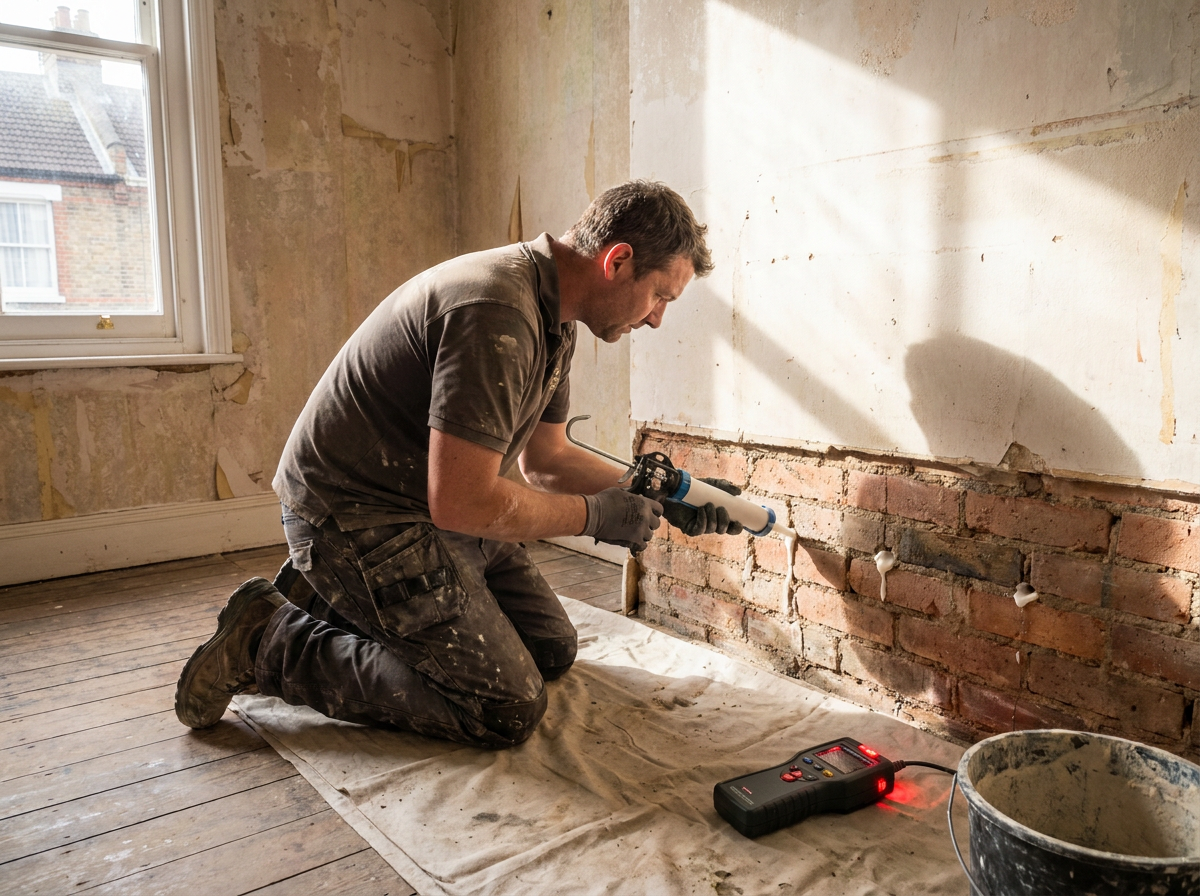
- Structural checks and any remedial work to walls, floor or ceiling
- First fix plumbing — pipes, waste, hot and cold supplies
- First fix electrics — extractor fan circuit, lighting, shaver socket
- Waterproofing / tanking of wet areas
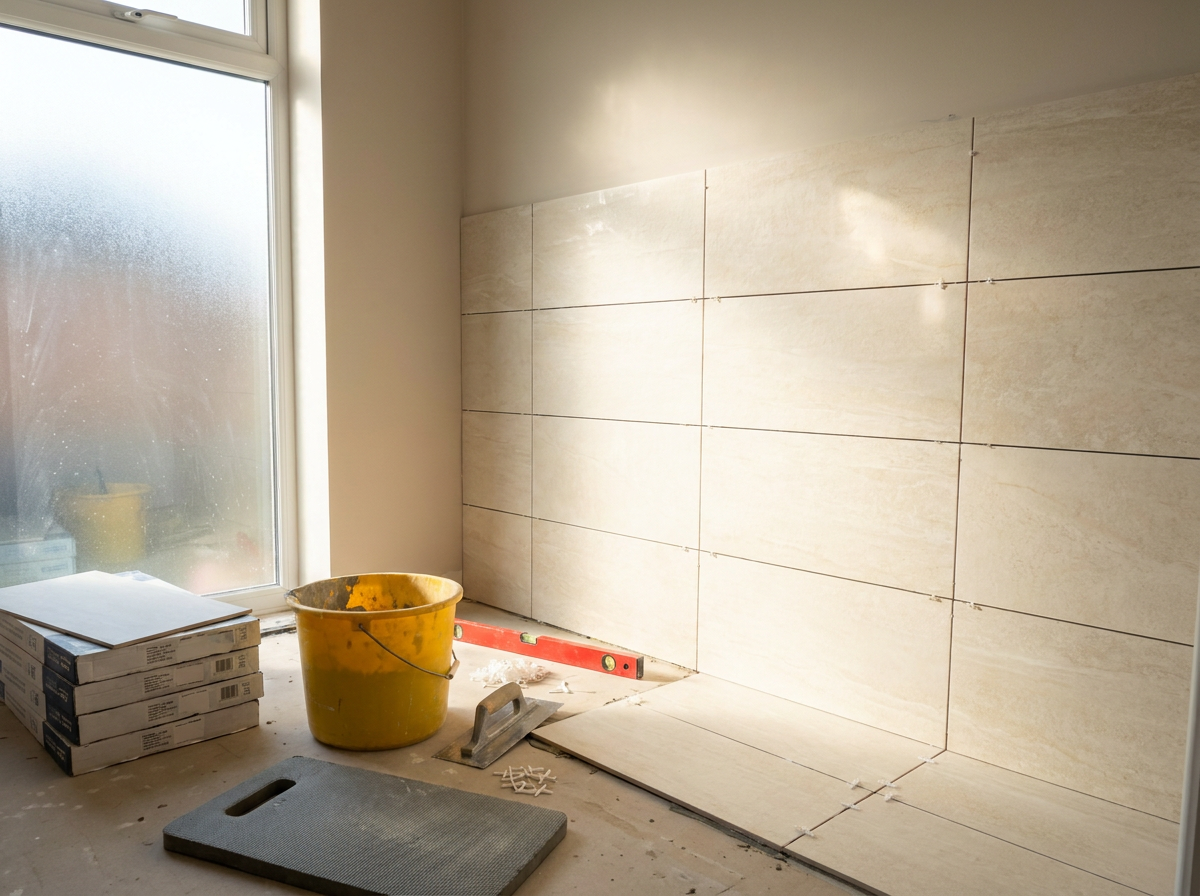
- Tiling — walls and floor
- Second fix plumbing — fitting bath, shower, WC, basin
- Second fix electrics — fitting lights, fan, sockets
- Finishing — caulking, sealant, accessories, mirrors
Step 4: Choose your sanitaryware and tiles before work starts
This is a step most homeowners leave too late and it causes delays. The contractor needs to know the exact sanitaryware before first fix plumbing can be completed — the position of the shower valve, the waste location for the bath, the height of the WC pan all affect what needs to be done to the plumbing. Make all product choices before work starts, not during. Your contractor should help you with this at the design stage.
Step 5: Don't cut corners on waterproofing
The single biggest cause of bathroom problems five years down the line is inadequate waterproofing. In a shower enclosure, all walls must be tanked before tiling. In a wet room, the entire floor and all walls to a minimum height must be tanked. This is not optional. Grout and silicone are not substitutes for proper waterproofing. Ask your contractor specifically what waterproofing system they use and where it's applied. If they can't give you a direct answer, that's a concern.
We use Aquadry or BAL Waterproof Plus tanking systems on all wet areas as standard. It adds a day to the job and it's never optional on our projects.
Step 6: Plan your access and living arrangements
If the bathroom being renovated is your only bathroom, you need to plan for 1–4 weeks without it. For some households that means staying elsewhere during the project. Discuss this with your contractor at the planning stage — a good contractor will sequence the work to minimise your disruption and be honest about how long you'll be without a functioning bathroom.
The right contractor makes all the difference
A bathroom is a high-consequence room to get wrong. Leaks, damp and poor finishes are all consequences of poor workmanship that you won't necessarily see immediately — but you'll deal with for years. Find a contractor who will provide a detailed written scope before the project starts, who has a process for managing all trades under one roof, and who guarantees their work. That's what proper bathroom renovation looks like.